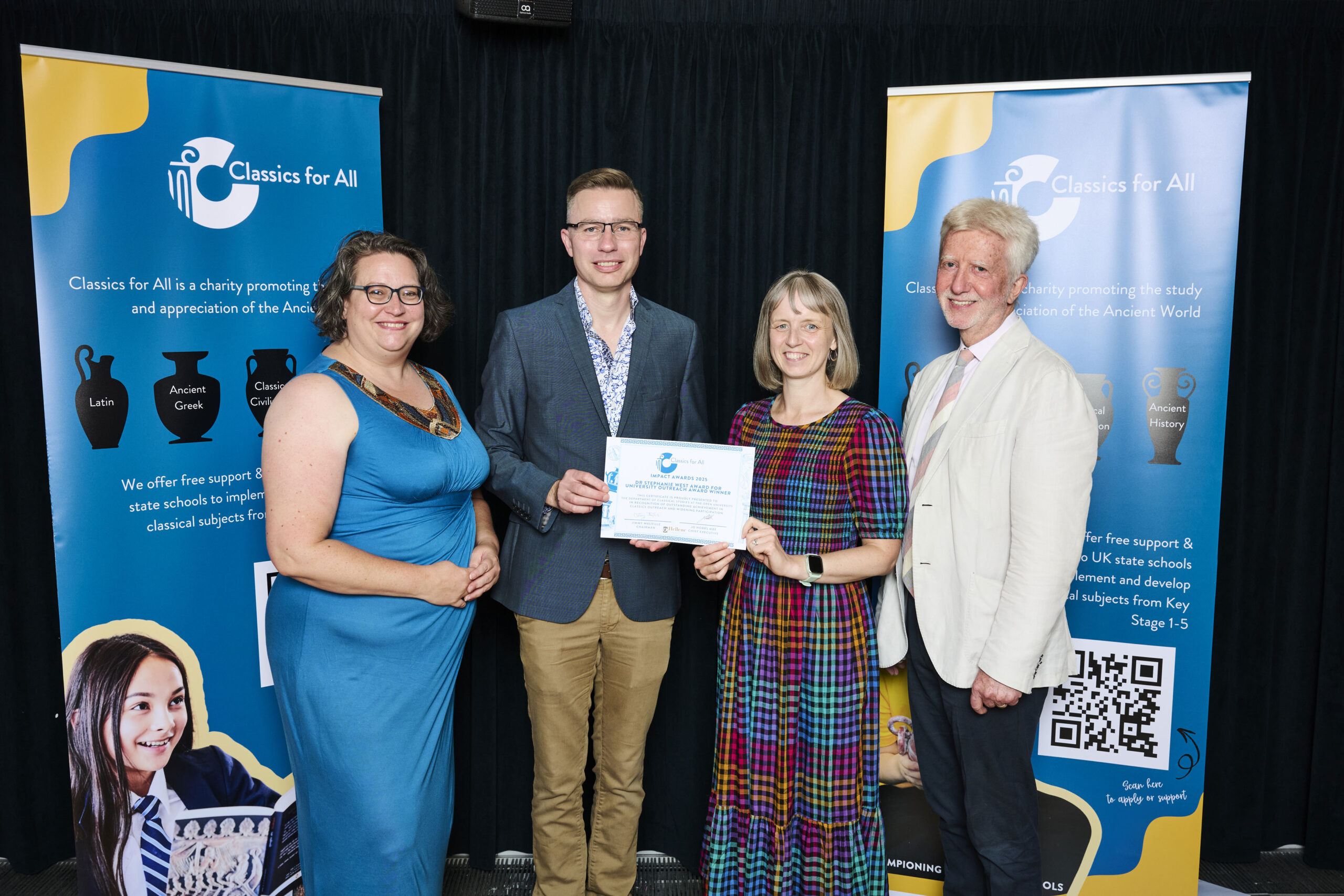
On April 30, 2026, the Open University is hosting a symposium on Rethinking Assessment in Classical Studies. This symposium, organized by Astrid Voigt and James Robson, brings together educational practitioners from across the UK and beyond to explore ways in which assessment design can respond to current pedagogical issues in the HE sector.
Many academics working in Classical Studies, Ancient History and related disciplines have developed forms of non-traditional and ‘authentic’ assessment in recent years. Some involve students submitting work in the form of reports, videos, or proposals, for example, while other support them to produce creative work, ranging from fiction to artwork and from exhibitions to computer games. Sometimes the motivation behind this kind of assessment is employability, with students completing ‘real-world’ tasks to prepare them for the world of work. Yet just as often other issues are being addressed, such as equality, diversity and inclusion, the challenges presented by Artificial Intelligence, or simply the desire to encourage students to think outside the essay box. Creative assignments, in particular, can inspire different forms of engagement and learning, while giving students scope to approach and show their understanding of ancient material in imaginative and personalized ways.
The presentations in this symposium outline innovative models of assessment already in place, showcasing assessment in the form of mini-exhibitions, cookery, music, poetry, and creative writing, amongst others.
The programme for the symposium can be found below.
For more information on the content of the talks, you can read the abstracts here.
Rethinking Assessment in Classical Studies
30 April 2026, 10:00-16:00, at The Open University in Milton Keynes and Online
PROGRAMME
10:00 – 10:20 ARRIVAL and NETWORKING with Hot Drinks and Pastries
10:20 – 10:30 WELCOME (Astrid Voigt and James Robson)
10:30 – 11:40 SESSSION 1 Rethinking Assessment: Authenticity, Diversity and Inclusion
Authentic Assessment and Active Learning at University of Bristol
Hannah-Marie Chidwick and Shelley Hales, University of Bristol
Assessing ‘Applied Classics’
Alice König, University of St Andrews
Diversifying Assessment: Students as Curators and Communicators
Emma Bridges and Astrid Voigt, The Open University
11:40 – 11:50 BREAK
11:50 – 13:00 SESSION 2 Creative Assessment and Beyond
The Joys (and Pains) of Assessing Creative Work
Sharon Marshall, University of Exeter
Conversation-based Oral Assessments for Classical Studies
Joe Grimwade, University of Southampton
Ancient MasterChef: Using a Food-based Assessment to Address Cultural Bias and Misconceptions
Erica Rowan, Royal Holloway, University of London
13:00 – 14:00 LUNCH
14:00 – 14:50 SESSION 3 Assessment Rethought: Case Studies 1
Rethinking Formative Assessment in Classics: The Case of the Homeric Map of London
Antony Makrinos, University College London
Real-World Scenarios: AI Literacy for Classics, with or without AI
Edward A. S. Ross, Jackie Baines, University of Reading
Creating Centos: Writing Poetry as a Form of Assessment
Matthew Payne, University of Leiden (Netherlands)
14:50 – 15:00 BREAK
15:00 – 15:30 SESSION 4 Assessment Rethought: Case Studies 2
The X Sleepers of Y: Using a Creative Assignment to Investigate Religious and Social Transformations in Late Antiquity
Mark Humphries, Swansea University
A Creative Guide to Early Rome: Authentic Assessment in Ancient History
Henry Clarke, University of Leeds
15:30 – 16:00 BLUE SKY THINKING and CLOSE

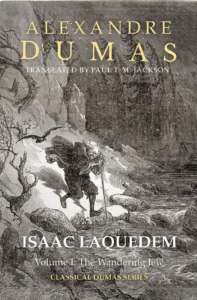 “Of the hundreds of writers and artists who have adapted the legend of the Wandering Jew, Alexandre Dumas is among the most well-known and beloved. And yet, his Isaac Laquedem is not well known among Anglophone readers or much included in voluminous scholarship on the Wandering Jew legend. Paul Jackson’s wonderful new translation is sure to change this” (Professor Lisa R. Lampert-Weissig).
 My first encounter with Aristophanes’ Lysistrata was as a first-year undergraduate as part of a Greek and Roman Drama module, and I can safely say it was love at first sight. We studied tragedy for the first semester, and as exciting and profound as Aeschylus, Sophocles and Euripides’ plays were for me at the time, I found myself impatiently waiting for Christmas to be over when all the secrets of Greek comedy would finally be revealed to me. The twinkle in my lecturer’s eye whenever he said the name ‘Aristophanes’ was intriguing enough, but it was the rumours I heard from fellow students about Aristophanes’ anarchic, sassy, quick-fire plays with their countless willy, bum and fart jokes that threatened to send me over the edge. Greek Comedy sounded mind-blowing and my mind could hardly wait to be blown.
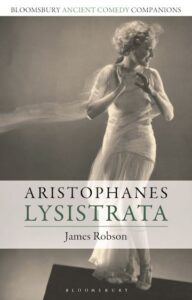 Reality hit hard, however, when we finally got to the plays themselves. Greek comedies were like nothing I had ever encountered before, it’s true, but that actually made them tough to read. Plots didn’t always progress logically, and Aristophanes’ stylistic switches and linguistic exuberance could often be difficult to make sense of. Most disappointingly of all – the fantastic willy gags aside – the jokes were often challenging to appreciate, designed as they were for a particular audience, in a particular time and place, and therefore referencing people, events, conventions and objects that were often unfamiliar to me. I desperately wanted to ‘get’ Greek Comedy, but was struggling to find an Aristophanic play to fall in love with. That is, until I found Lysistrata.
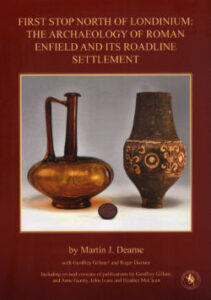
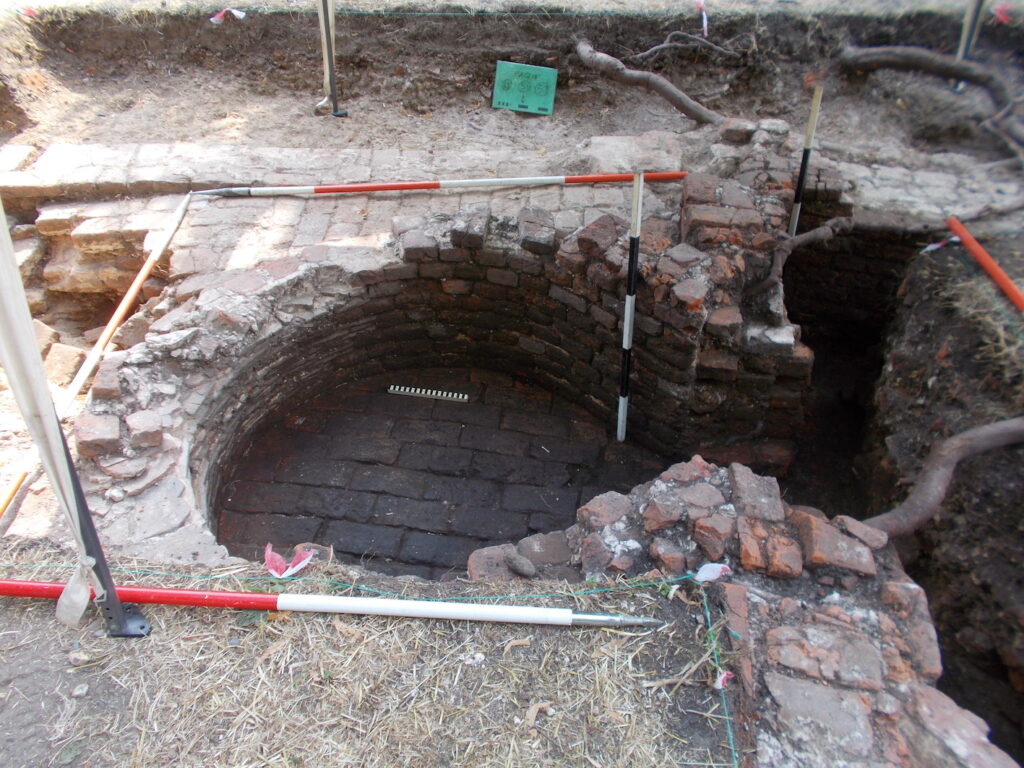
 Dr Martin Dearne has been an Associate Lecturer with The Open University for twenty years, and has taught on many of our Classical Studies modules (AA309, A209, A251, A330, A219, A229, A105, A151, A112). He is the author of six books, the most recent of which is an archaeological study of Elsyng Palace in the London Borough of Enfield. In this blog post, Martin tells us more about
 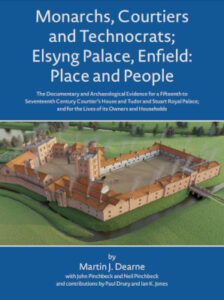 Hello Martin, and congratulations on your new book! Please could you start by introducing our readers to Enfield and its history?